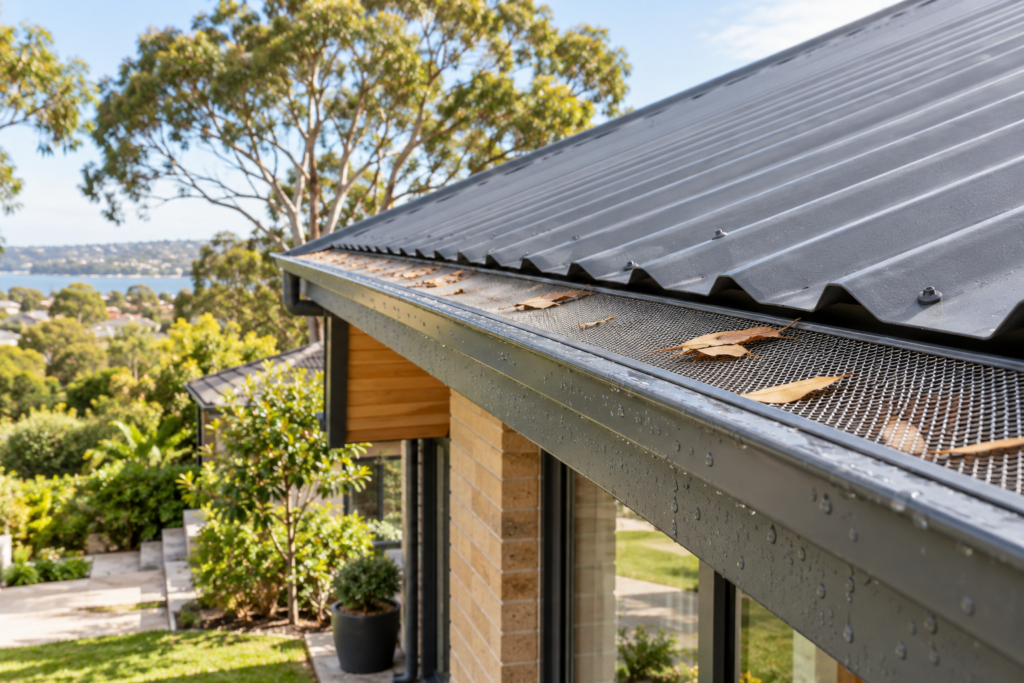
Leaves, twigs and other windblown debris can quickly collect around the edge of a roof, particularly when mature trees grow close to the home. Properly fitted leaf mesh can help prevent larger pieces of vegetation from entering the gutter system. The right solution should suit the roof design, surrounding environment and typical weather conditions. Quality gutter mesh also allows rainwater to pass through while reducing the amount of material that can obstruct drainage. When installed correctly, a gutter guard can make ongoing roof maintenance safer and more manageable.
Why Clear Gutters Matter
Gutters are designed to collect rainwater from the roof and direct it towards downpipes, drains or water tanks. When the system becomes blocked, water may spill over the sides rather than following the intended drainage path.
Overflowing water can soak exterior walls, stain fascia boards and collect around the foundations of a building. Persistent moisture may also contribute to mould growth, timber deterioration and damage to painted surfaces. In some homes, water can move beneath roofing materials or enter the ceiling cavity.
Blocked gutters may also place unnecessary pressure on brackets and fixings. Wet leaves become surprisingly heavy, particularly after several days of rain. If the added weight causes sections to sag, water may pool in low points and make the drainage problem worse.
Consider the Surrounding Environment
The amount and type of debris reaching a roof will depend heavily on the property’s location. Homes surrounded by eucalyptus trees may deal with narrow leaves, bark strips and small twigs. Properties near pine trees may experience problems with fine needles, while suburban homes can collect blossoms, seed pods and material carried by birds.
Seasonal conditions also influence maintenance requirements. Strong winds can deposit large quantities of debris in a short period, even when there are no trees directly above the roof. During dry weather, this material may remain unnoticed until the next period of heavy rain.
Homeowners should assess which sections of the roof are most exposed. Valleys, internal corners and areas beneath overhanging branches generally require closer attention because debris naturally gathers in these locations.
Choose Materials Suited to the Roof
A protection system should be compatible with the existing roofing material and profile. Metal roofing, terracotta tiles and concrete tiles have different installation requirements. The roof pitch, gutter shape and position of the first row of tiles can also affect how the system should be secured.
Material quality is another important consideration. Products exposed to strong sunlight, heavy rainfall and changing temperatures need to retain their shape and strength over time. In coastal areas, corrosion resistance is especially important because salt in the air can accelerate the deterioration of unsuitable metals and fixings.
Colour may also influence the final result. A product that closely matches the roof can create a more discreet appearance and preserve the overall look of the home.
Professional Installation Can Improve Performance
Correct installation is essential for effective water flow. If the material is loose, poorly aligned or attached at the wrong angle, debris may gather along the roof edge instead of being carried away by wind and rain. Openings around valleys, corners and downpipes can also allow material to enter the drainage system.
An experienced installer can inspect the condition of the roof and gutters before work begins. Existing debris should be removed, and any damaged brackets, loose tiles or deteriorated sections should be addressed. Installing a protection system over blocked or damaged drainage components will not solve the underlying problem.
Professional installers should also understand the appropriate fastening methods for different roof types. This helps reduce the risk of damage to tiles, coatings and waterproofing components.
Maintenance Is Still Necessary
No roof protection product makes a property completely maintenance-free. Fine dust, pollen and small organic particles can still settle on the roof or enter drainage areas. Seeds may also germinate when moisture and sediment collect in sheltered places.
Periodic inspections remain important, particularly after storms, extended dry periods or nearby tree pruning. From ground level, homeowners can look for overflowing water, visible plant growth, sagging sections or stains beneath the roofline.
Roof access can be dangerous, especially on steep, wet or fragile surfaces. Where a close inspection or cleaning is required, engaging a qualified professional is generally the safer option. Professionals can also check valleys, flashings, downpipes and drainage outlets while assessing the roof.
Support Better Water Management
Keeping gutters clear is part of a broader approach to protecting the home from water damage. Downpipes should direct water away from the building, drains should remain unobstructed, and rainwater tank inlets may require additional screening or filtration.
Regular inspections combined with a suitable protection system can reduce the frequency of major clean-outs and help rainwater move efficiently away from the roof. The best results come from selecting appropriate materials, arranging careful installation and continuing with sensible maintenance throughout the year.